RBAW Monthly Newsletter
- June 2026 -
|
|
|
|
|
RBAW Secures MORE CVA Grants for Washington Boaters |
|
|
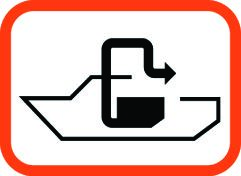
RBAW has secured two new Clean Vessel Act (CVA) grants that will expand mobile pumpout services in Washington using boater-generated federal funding. The awards will extend RBAW’s highly successful West Puget Sound FREE mobile pumpout program and lay the groundwork for a first-of-its-kind FREE mobile pumpout service in the San Juan Islands.
|
|
|
These awards represent Washington boaters receiving the benefits of a program they already help fund.
|
|
|
Turning Boater Dollars into Boater Services
Every time boaters purchase fuel, engines, fishing equipment, and other boating-related products, they contribute to the federal trust fund that supports the Clean Vessel Act program. These boater-generated dollars are distributed back to states through competitive grants administered in Washington by the State Parks Boating Program, with federal funding covering 75% of project costs and local partners providing the remaining 25%.
#1 – Three More Years of FREE Mobile Pumpout Service in West Puget Sound
Following the success of the current West Puget Sound mobile pumpout program, RBAW has been awarded a new three-year CVA grant extending service through 2029. Since launching in 2023, the program has collected more than 47,000 gallons of waste from nearly 2,000 vessels in Liberty Bay, Eagle Harbor, Blake Island, Illahee, and Fort Ward. The new grant ensures boaters will continue to have access to free, convenient pumpout service while helping protect water quality in Puget Sound's No Discharge Zone.
RBAW would also like to extend our sincere appreciation to the City of Poulsbo, City of Bainbridge Island, Port of Poulsbo, and the Washington State Parks Foundation, whose financial support provided the required local match for the program's first three years. Their partnership has helped make free mobile pumpout service a reality for thousands of boaters, and we look forward to working with them, and others, as we sustain and grow the program through 2029. |
|
|
#2 – Designing a Mobile Pumpout Service for the San Juan Islands + Vessel
RBAW has also been awarded a Design and Engineering Grant to evaluate a dedicated mobile pumpout program for the San Juan Islands, a region identified as a priority for expanded service in the Washington Regional Pumpout Facility Assessment (WRPFA).
The engineering and design effort will focus on several key questions: • Where can collected waste be offloaded and processed? • What operating model will best serve boaters throughout the islands? • What partnerships are needed to support long-term operations? • Can the program be delivered in a financially sustainable manner? This work seeks to move the San Juan Islands mobile pumpout concept from years of discussion to a clear implementation strategy. If the feasibility work confirms a viable program, funding for construction of a purpose-built mobile pumpout vessel is already included in the grant. As this work gets underway, RBAW will be engaging local governments, marine businesses, ports, tribes, nonprofit organizations, and other community stakeholders to help design the program and identify the partnerships needed for long-term success. In addition to securing the required 25% match funding, a key objective of this effort is determining how a mobile pumpout service can be sustainably supported for years to come. Individuals or organizations interested in the project, or with ideas for potential partners, are encouraged to contact RBAW Board Member Andrea Pierantozzi at Programs@RBAW.org. |
|
|
RBAW has secured close to $900K for WA Boaters Federal CVA grants + state & local partners |
|
|
Advocacy That Delivers Results
Protecting boating access remains at the core of RBAW's mission, but we are equally committed to creating opportunities that directly benefit Washington boaters. From advocating on taxes, fees, and regulations to securing funding for boating grounds and services, RBAW continues to work on behalf of the recreational boating community. None of this work would be possible without the support of our members, agency partners, local governments, ports, tribes, nonprofit organizations, and volunteers who help champion recreational boating throughout Washington. Thank you for your continued support of RBAW and recreational boating in Washington. If you know of organizations that may be interested in supporting these efforts, we encourage you to help make the connection. |
|
|
|
|
Mind The Zone on Lake Union this Summer |
|
|
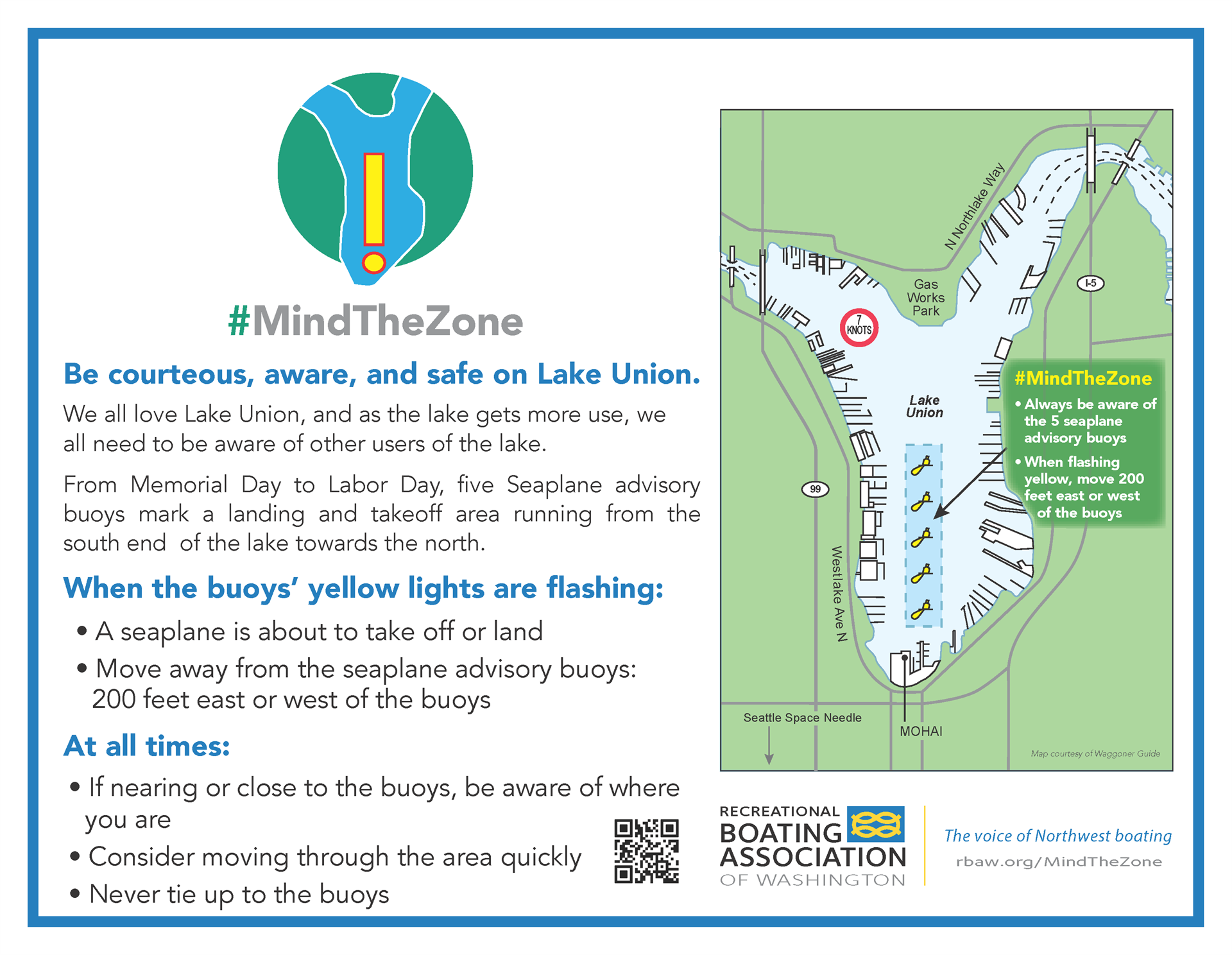
Summer has arrived on Lake Union! With this weekend’s sun and heat, lots of people are headed to the lake! The State of Washington and City of Seattle funding that RBAW receives covers all of the costs of this campaign, and RBAW leverages this funding extremely efficiently. Local businesses around the lake are sharing the campaign message with rental customers, we hired two fantastic Outreach Coordinators to talk directly with lake users onshore, and our campaign bus signs are on the electric trolleys in the neighborhood and downtown Seattle. The Mind The Zone short safety video has over two-million views on YouTube (and increasing) and local businesses soon expect the first wave of tourists and visitors for the World Cup soccer matches. |
|
|
And, our evergreen message continues: hanging out on Lake Union is what summer is all about in Seattle, but as more users flock to the lake, we all need to continue to be aware of other lake traffic and continue to share this resource. If you see the seaplane advisory buoys flash yellow, a seaplane is getting ready to take off or land: please move 200 feet east or west and give them a little space - it's the nice thing to do!
Please help us keep everyone safe on Lake Union this summer and reach out to MindTheZone@RBAW.org if you would like signage for your business, marina, yacht club, paddle group, etc., and share the message with any folks who might be looking to recreate on the water this summer. |
|
|
|
|
RBAW Annual Meeting November 21st, 2026 |
|
|
Summer Cruising Assignment (No Homework Required… Sort Of)
As you cast off this summer and enjoy Washington’s incredible waterways, keep an eye out for challenges, opportunities, and ideas that could help shape RBAW’s 2027 priorities.
Maybe you notice a boating access issue, a regulation that creates confusion, an issue impacting a yacht club outstation, or a success story we’d like to see replicated elsewhere. Those observations from real boaters are exactly what help guide RBAW’s advocacy efforts.
The Board is on its annual summer hiatus until September, but we're all still thinking about priority planning while we're out cruising. We'll have a draft list ready for discussion at the September Board meeting (September 3), then continue refining it before presenting it for approval by our Organizational Members (yacht and boating clubs) at the Annual Meeting in November.
So, while you're out enjoying the season, consider this your official summer assignment. The good news? It can be completed from the helm, the flybridge, a cockpit chair, or while conducting important research from your favorite anchorage.
We'll be looking for your ideas this fall. Until then, enjoy the cruising season—and don't forget to take notes between sunsets. |
|
|
|
|
Cruising Through Seal Pup Season |
|
|
Cruising the Pacific Northwest often comes with some pretty special wildlife encounters. One of the cutest? Spotting a seal pup resting on a beach, rocky shoreline, a dock, or swimming by your boat while at anchor.
If you see one, enjoy the moment—but make sure it's from a distance.
Each summer, harbor seals give birth throughout Washington’s marine waters. During the first few weeks of a harbor seal pup’s life, they may rest alone on shore, rocks, docks, or other infrastructure while their mom is off swimming and feeding in the area. In most cases, mom is nearby and keeping an eye on things. If you see a pup alone, it may seem like the pup is crying out to you for help, when in reality, they’re communicating with mom.
Unfortunately, when people approach a seal pup, it can cause the mom to get scared away, putting the pup at risk. If the pup is abandoned by the mother, it will not survive without medical intervention.
As boaters, we’re more likely than most people to encounter seal pups because we visit beaches, coves, anchorages, and remote shorelines where seals haul out.
If You Spot a Seal Pup: - Enjoy the sighting from a distance – you should be far enough away that the animal isn’t paying attention to you. In the U.S., it’s the law to stay 50 yards away from seals.
- Keep people and pets well away from the animal.
- Avoid landing on the same beach or rocks if possible.
- not touch, feed, move, or attempt to return the pup to the water.
- Use binoculars or a zoom lens instead of getting closer for photos.
- If you’re anchoring nearby, minimize activity around the pup and give it room.
An undisturbed seal pup is usually exactly where it should be. One of the best ways boaters can help Washington’s marine wildlife is simply by giving it space. Your respectful distance helps ensure that mom and pup will stay together in the wild. If you do encounter a seal that appears injured, entangled, is being harassed, or in distress - do not approach it. Instead, contact the Marine Mammal Stranding Network, whose trained responders can assess the situation and determine whether help is needed.
So, this summer, if you come across a fuzzy-faced beachgoer enjoying a nap in the sun, consider it a privilege to witness—and give them the room they need to thrive. Look, enjoy, photograph from afar—but leave the parenting to the seals. |
|
|
West Coast Marine Mammal Stranding Network Hotline: 1-866-767-6114
Describe the location, take photos from a safe distance, and report what you observed. Trained responders can determine whether intervention is necessary. |
|
|
Read more about Seal Pups in the Puget Sound from SR3 below.
|
|
|
|
|
|
|
Washington Water Passes 101 |
|
|
From our friends at Washington State Parks: With so many lakes, rivers, bays, inlets and ocean shores, it’s no wonder boating, paddling, angling and beach camping are popular in Washington, especially when the weather gets warm.
Washington State Parks manages public boat ramps, docks, launches and mooring buoys, and each has its own pass or permit requirements.
Click below for your handy guide to help you determine which passes you may need for your favorite water activity. |
|
|
|
|
|
|
Reminder: Dog Entry Requirements Remain in Effect for Boaters Returning from Canada
|
|
|
If you're planning a boating trip to Canada with your dog this season, remember that the CDC's dog importation requirements remain in effect for dogs returning to the United States.
Since August 1, 2024, all dogs entering or returning to the U.S. must be at least six months old, appear healthy, have proof of current rabies vaccination, and be microchipped. For dogs that have been only in Canada or other dog rabies-free or low-risk countries during the previous six months, the CDC has simplified the process. The primary requirement is completion of the free online CDC Dog Import Form, which can be completed in just a few minutes and is valid for multiple entries for up to six months. The receipt can be printed or shown on your phone when returning to the U.S. |
|
|
|
|
|
|
|
|
Duwamish Waterway Deviation Starting July 7th |
|
|
Duwamish Waterway East - 1st Ave South Drawbridge - Seattle WA
The Coast Guard intends to approve a temporary deviation that governs the operating schedule for the 1st Avenue Bridge (LLNR 16887) across the Duwamish Waterway, mile 2.5, in Seattle, WA. This deviation authorizes the draws to not open to mariners during evening maintenance. The temporary draw closure will be from 1800 to 0600 from 7 July 2026 to 8 January 2027. The subject bridges provide 32 feet for 100 feet center span and 22 feet side spans of vertical clearance in the closed-to-navigation position above high water. No alternate route is available on the Duwamish Waterway. The bridges shall operate in accordance with 33 CFR §117.1041 at all other times. For more information on this event contact Garrett Hutton at (206) 440-4626 or garrett.hutton@wsdot.wa.gov.
|
|
|
|
|
New Canadian SRKW Rules – 1000 Meter Distance Required
|
|
|
Now in effect, as of June 1, 2026, Canada has a 1000-meter (just under 1100 yards) distance rule for SRKWs. “Vessels must stay 1,000 meters away from Southern Resident killer whales in southern BC coastal waters between Campbell River and just north of Ucluelet until May 31, 2027.” This new rule replaces the 400-meter rule in these waters that applied to all killer whales, not just SRKW.
The Be Whale Wise site has the complete new set of rules for Canadian waters, although as of this writing they have NOT yet updated their infographic.
|
|
|
|
|
The 1000 yd Distance Rule for Southern Resident Killer Whales (SRKW) Remains in Effect in Washington Waters The rules for SRKW (and other marine mammals) remain the same in Washington waters for 2026. As a reminder, the rules are: - Boaters must stay 1,000 yards from Southern Resident killer whales.
- Boaters must go slow (<7 knots) within ½ mile of Southern Resident killer whales and move away perpendicular to their path if safe to do so.
- Boaters must disengage engine(s) if Southern Resident killer whales appear within 400 yards, if safe to do so.
- Boaters must stay 200 yards from Bigg’s/Transient killer whales
- Boaters must not park in the path within 400 yards of Bigg’s/Transient killer whales
- Boaters should stay 200 yards from baleen whales resting or with a calf.
- Boaters should stay 100 yards from all other marine mammals (e.g. humpback whales, gray whales, sea lions and seals)
The Washington regulations recognize that there are some areas in Washington waters where navigable channels are narrower than 1,000 yards. If you encounter Southern Resident killer whales and you're between ½ mile and 400 yards away, you should motor slowly (under 7 knots) away and out of their path of travel, if it is safe to do so. If you are closer than 400 yards, you must disengage your engine(s) and wait for the whales to pass if it is safe to do so.
|
|
|
|
|
|
|
|
What is eelgrass?
Eelgrass is a type of seagrass that forms dense underwater meadows, providing habitat for a variety of marine life like Dungeness crabs, salmon, and herring. | |
|
|
|
|
RBAW Legislative Committee Meeting
June 16th, 2026 | 5:00 PM - via Zoom
RBAW Governance Committee Meeting
June 17th, 2026 | 4:00 PM - via Zoom
RBAW Executive Committee Meeting
June 22nd, 2026 | 4:00 PM - via Zoom RBAW Finance Committee Meeting
July 14th, 2026 | 9:30 AM - via Zoom RBAW Executive Committee Meeting
July 27th, 2026 | 4:00 PM - via Zoom RBAW Executive Committee Meeting
August 24th, 2026 | 4:00 PM - via Zoom
RBAW Board of Directors Meeting
Sept 3rd, 2026 | 6:00PM - via Zoom RBAW Board of Directors Meeting
Oct 1st, 2026 | 6:00PM - via Zoom AND In-Person at SYC RBAW Annual Membership Meeting
Nov 21st, 2026 | 9:00AM - In-Person at Edmonds Yacht Club |
|
|
|
|
Contributing Business Memberships |
|
|
|
|
|
|
|
|
Follow us on social media and join our boating community!
|
|
|
|
|
|
|
|



.png)